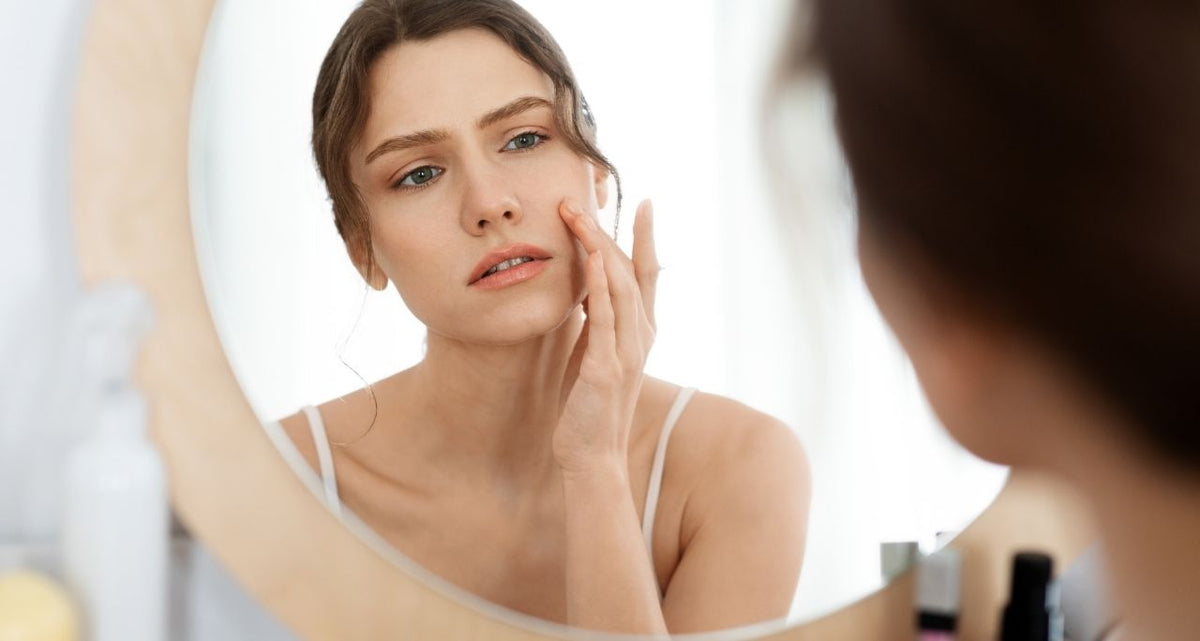


Why Does Our Skin Age?
Stress, environment, hormones... why your skin does not age the same way as your neighbor's. IOMA decodes the true biological factors behind skin aging.
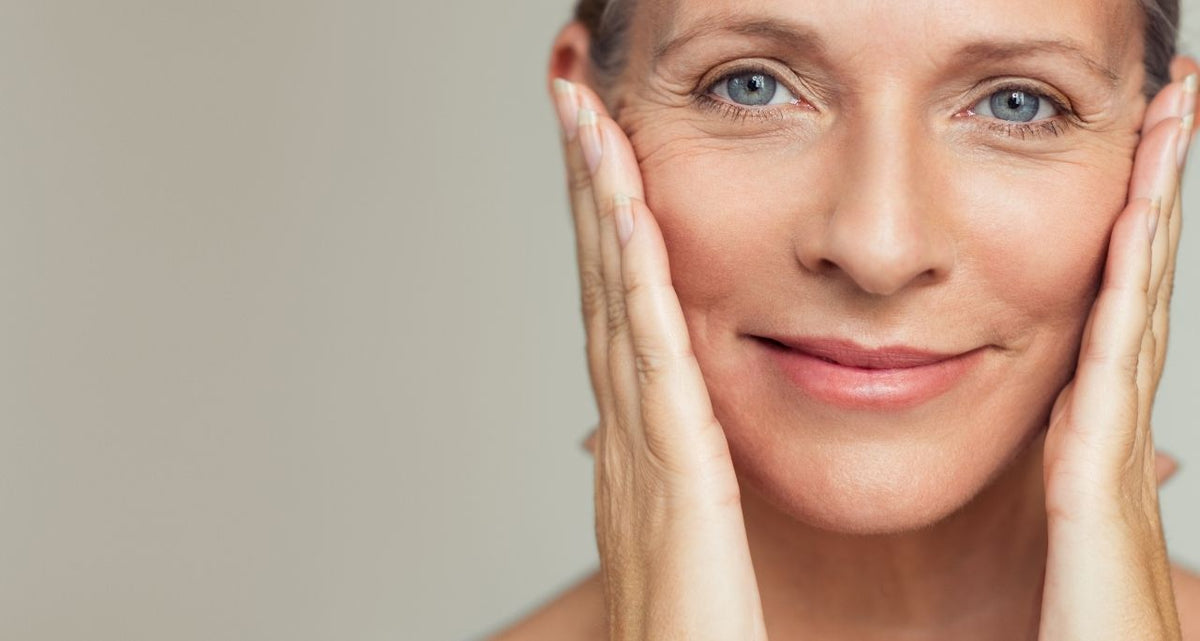
Why can two people of the exact same age have noticeably different skin? Because cellular aging is not solely determined by the number of years that have passed. Genetics, environment, lifestyle habits, stress, hormonal fluctuations, and even changing seasons all shape each skin's unique trajectory.
Moreover, this trajectory is rarely steady or linear. Your skin may look markedly different after a demanding period of stress, react more acutely to colder weather, or see its physiological needs shift at pivotal life stages.
To grasp the broader biological mechanisms, visible indicators, and corresponding solutions, explore our comprehensive guide, "Skin Aging: Causes, Signs, and Solutions." Here, an intriguing question arises: why doesn't your skin age in the exact same manner as someone sharing your exact birth year?
→ Read more: Skin aging: causes, signs, and solutions
Is cellular aging identical for two skins of the same chronological age?
Two individuals sharing the same age share neither the exact same biological blueprint nor identical life histories. Cellular aging is the cumulative result of time-dependent internal mechanisms interwoven with every external exposure encountered over a lifetime.
Over the years, cellular performance evolves. Renewal rates and endogenous repair pathways can become less efficient, while phenomena such as oxidative stress, cellular senescence, and alterations in mitochondrial function progressively contribute to cutaneous aging.
Yet these transformations unfold in vastly different living conditions for each individual. Genetic heritage plays a role, as does cumulative environmental exposure accumulated year after year—spanning regional climate, lifestyle patterns, and cumulative solar irradiation. Contemporary dermatological research therefore differentiates between intrinsic and extrinsic skin aging mechanisms, which constantly interact with one another.¹
Chronological age is simply a calendar reference, not an exhaustive summary of your skin. At identical calendar years, two skins may have traversed entirely divergent physiological journeys.
Does your skin bear the memory of what it has lived through?
Yes. Throughout life, the skin is continuously exposed to multifaceted influences that interact dynamically with its intrinsic characteristics. The scientific concept of the exposome provides a precise framework for understanding this accumulation and its direct impact on each skin's unique trajectory.
The exposome encompasses the totality of environmental and lifestyle exposures an individual encounters throughout life. In dermatology, researchers focus particularly on solar radiation, air pollution, tobacco smoke, climate extremes, and habitual lifestyle factors.²
The strength of this concept lies in avoiding the artificial isolation of individual factors. Your skin does not face solar UV on one day, stress during another year, and atmospheric pollution in a separate reality. All these influences superimpose, interact, and modulate your underlying cellular biology.
The exposome helps explain why there is no single, uniform way to age. It reflects far less how old you are than the complex environment in which your skin has lived and evolved.
Stress, sleep, and environment: does their impact accumulate over time?
What the skin endures day after day actively shapes its long-term evolution, yet this is never a simplistic equation. Duration, intensity, recurrence of exposures, and the skin's endogenous defense capacity all dictate the outcome.
Ultraviolet radiation and atmospheric pollutants notably stimulate the generation of reactive oxygen species (ROS). When ROS production outpaces available antioxidant defense capacity, oxidative stress ensues, contributing to the progressive degradation of fundamental cellular components.³
Similarly, everyday lifestyle habits, psychological stress, and sleep deprivation are actively studied for their complex interactions with neuroendocrine and biological pathways. This does not mean that a single sleepless night permanently "ages" your skin, nor that an isolated demanding period irrevocably dictates its future.
What matters is the overall narrative. Some influences are fleeting, others repeated; some can be actively mitigated, while others cannot. Approaching skin longevity through this lens allows for proactive prevention without guilt: understanding what challenges your skin is the first step toward supporting it with tailored precision.
→ Read more: Stress and the skin
Why can hormonal fluctuations alter your skin's requirements?
The skin is an exquisitely hormone-responsive organ. Across different milestones of life, hormonal fluctuations can shift its fundamental attributes, explaining why a formulation that once delivered remarkable results may no longer satisfy your skin's evolving requirements.
Hormones govern diverse cutaneous mechanisms and constitute a primary focus within intrinsic aging research. Hormonal shifts noticeably influence skin barrier function, epidermal hydration levels, collagen synthesis, and the integrity of extracellular matrix architecture—transformations that manifest distinctly from puberty and pregnancy through perimenopause and menopause.¹
This dynamic reinforces that skin trajectory is never linear. Its biological priorities evolve across different life chapters, independent of whether new fine lines or firmness changes have become visible.
This is where a truly personalized approach becomes indispensable. Rather than presuming that a given calendar age mandates a standardized routine, it is vastly more relevant to objectively assess what your skin requires at this precise moment in time.
Do the changing seasons genuinely alter your skin?
Yes, seasonal shifts temporarily modify the physiological behavior and requirements of the skin. A noticeable change in comfort, moisture retention, or cutaneous reactivity does not necessarily signify that the skin has abruptly accelerated its aging process.
Fluctuating ambient temperatures, relative humidity, wind velocity, indoor climate control, and UV index create an ever-changing environment to which the skin must continually adapt. A cold, dry winter season, for instance, imposes mechanical and enzymatic demands entirely different from a hot, humid summer.
This distinction is paramount: not every visible fluctuation indicates irreversible aging. Many changes simply represent your skin's immediate adaptive response to its prevailing environment.
Observing these seasonal shifts helps prevent falling into a rigid, static routine. The skin you care for in midwinter does not express identical needs to the skin you protect during the peak of summer—even though your chronological age remains virtually unchanged.
Understanding your unique skin trajectory to provide bespoke care
Understanding why skin ages is not about pinpointing a single culprit. It is about recognizing a singular, living trajectory shaped by your innate biology, accumulated exposures, and evolving life milestones.
Certain parameters are biologically fixed. Others can be strategically anticipated, such as chronic UV exposure. Still others simply call for responsive adaptation: replenishing a compromised barrier, adjusting to seasonal humidity shifts, or nourishing structural changes as years progress.
This scientific paradigm reframes the fundamental question asked in skincare. It is no longer about asking, "Which product corresponds to my age group?" but rather, "What does my skin need at this precise chapter of its story?"
This exact philosophy defines Beautiful Longevity at IOMA: preserving cellular vitality and championing the skin's natural evolution, without ever attempting to freeze it in a past iteration of itself.
Because two skins of the same chronological age never tell the same story. And because your own skin never remains static from one chapter of life to the next.
To truly understand it is to empower what it can become.