


What Is the Biological Age of the Skin?
Discover what biological skin age means, how it differs fundamentally from chronological age, and why it is the cornerstone of contemporary skin longevity.
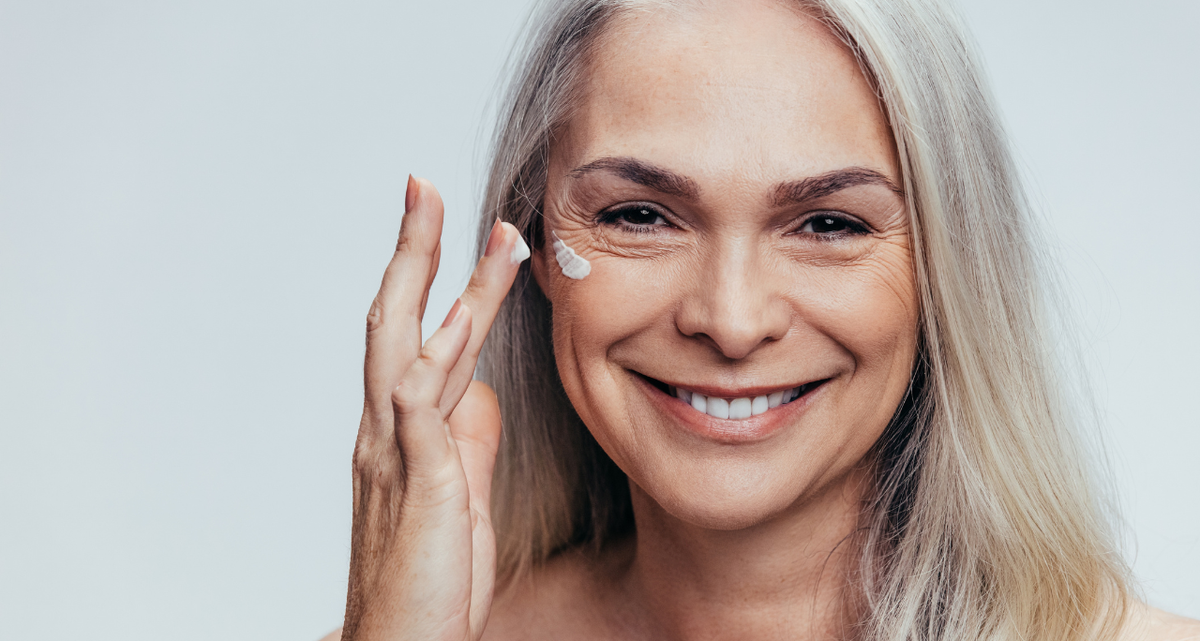
We all know our chronological age. It corresponds simply to the calendar years elapsed since birth. Yet when it comes to living human skin, this number alone is insufficient to understand its true physiological state.
Two individuals sharing the identical birth year can exhibit radically divergent cutaneous quality: firmness, elasticity, luminosity, and repair capacity do not always follow the linear march of time. This is where the vital concept of the biological age of the skin emerges. Biological age assesses the actual functional state of cutaneous tissues, independently of calendar records. It reflects how the skin is genuinely functioning internally, rather than merely counting the years it has lived.
Chronological age versus biological age: what is the difference?
Chronological age advances strictly linearly. It is identical for everyone: with every passing calendar year, it increases by precisely twelve months.
Biological age, by contrast, is dynamic and governed by a multitude of internal and external factors:
- cumulative ultraviolet (UV) radiation,
- air pollution and microparticulates,
- psychological and oxidative stress,
- sleep quality and circadian disruption,
- nutrition and metabolic health,
- hormonal fluctuations,
- ambient daily environment,
- consistency and scientific efficacy of the skincare ritual.
It reflects the biological vitality and functional integrity of cells and tissues.
Consequently, skin can be biologically younger than an individual's chronological age when its repair functions and barrier are rigorously preserved. Conversely, it may exhibit accelerated biological aging if subjected to repeated environmental aggression or if its endogenous repair pathways have become compromised.
Biological age does not measure passing time. It measures the functional condition of your skin in the face of time.
What are the primary markers of biological skin age?
Cutaneous biological age cannot be summarized by visible wrinkles alone. It is anchored in deeper cellular mechanisms.
Key decisive parameters include:
- epidermal cellular turnover rate,
- fibroblast metabolic activity (synthesis of collagen and elastin fibers),
- dermal density and structural elasticity,
- integrity of the stratum corneum barrier function,
- oxidative stress and reactive oxygen species levels,
- chronic low-grade micro-inflammation (inflammaging),
- deep dermal and epidermal hydration reserves,
- cellular repair capacity following external stress.
When these functions decelerate or fall out of equilibrium, the skin progressively loses resilience. It becomes thinner, less toned, and more vulnerable to environmental challenges.
The contemporary imperative in cosmetic science is therefore to act upstream on these fundamental biological pathways.
Why longevity science is revolutionizing skincare
The concept of biological age is part of a broader scientific revolution: the longevity paradigm. Across medicine, nutrition, and performance science, the objective is no longer merely to live longer, but to live healthier and more vibrantly. This visionary approach now transforms skincare.
We no longer seek merely to camouflage or correct visible marks of aging after they appear. We seek to protect cellular vitality and preserve the functional longevity of living tissues.
In high-performance cosmetic science, this translates to:
- stimulating endogenous collagen and elastin synthesis,
- protecting DNA and cellular structures against oxidative stress,
- reinforcing the skin barrier,
- optimizing cellular regeneration pathways,
- mitigating inflammatory signaling cascades.
The skin is treated as a vital living organ whose trajectory can be actively and positively influenced.
Biological age thus becomes a strategic indicator: it clarifies exactly where the skin stands on its biological journey, empowering highly targeted and effective intervention.
Does the environment accelerate biological skin age?
Yes. Environmental exposures play a monumental role in shaping biological skin age. Solar UV rays, in particular, are responsible for up to 80% of premature aging. They fragment dermal collagen fibers and generate immense oxidative cascades. Atmospheric pollution fuels chronic micro-inflammation and weakens surface barrier lipids. Extreme temperature shifts, sleep deprivation, and sustained stress further blunt the skin's natural ability to repair itself overnight.
This is precisely why two people of identical chronological age can display strikingly different skin vitality.
Can you positively influence your skin's biological age?
Biological age is not permanently fixed. It is dynamic and receptive to intervention.
Evidence-based habits and advanced dermocosmetic actives can positively modulate these biological mechanisms:
- daily high-protection broad-spectrum SPF,
- potent antioxidants to neutralize free radicals,
- biomimetic peptides to support collagen synthesis,
- multi-molecular humectants to maintain deep water equilibrium,
- physiological biomimetic lipids to restore the cutaneous barrier.
The goal is not to erase calendar years, but to preserve cellular health. Proactive prevention becomes just as vital as corrective refinement.
Why objective skin measurement transforms the approach to care
If biological age reflects the true condition of your skin, the logical conclusion is to customize skincare based on real-time biological data rather than a generic age bracket.
Two 40-year-old skins can possess:
- radically divergent hydration and lipid needs,
- distinct cellular repair velocities,
- contrasting biological priorities.
Pinpointing these differences enables the formulation of targeted active complexes at optimal concentrations.
Accurate measurement thus becomes the essential key to accompanying your skin through time.
How IOMA objectively measures your skin's true age
Since 2010, IOMA devices measure the skin rather than guessing its age: six clinical parameters—hydration, fine lines, dark spots, pore refinement, firmness, and complexion evenness—analyzed across more than one million diagnoses worldwide.
The patented IOMA Sphere photographs the face under calibrated multispectral lighting, quantifying what the naked eye cannot yet detect. Each parameter is calibrated against clinical databases of hundreds of thousands of skin profiles: your skin is evaluated against its true biological state, not your calendar date of birth.
Repeated across several months, this objective measurement tracks how your skin evolves and confirms that your skincare routine is steering your biology in the right direction. This is the cornerstone of Beautiful Longevity: knowing your skin intimately before treating it. Discover your online skin diagnosis.
Toward a more sustainable, scientific vision of beauty
Understanding biological skin age means embracing a modern, intelligent, and respectful vision of personal beauty. It is no longer about short-lived superficial cosmetic fixes, but about preserving the essential physiological functions that grant the skin lasting resilience.
True skin longevity relies on a coherent scientific strategy: protect, support, optimize, and calibrate. Healthy skin today is resilient skin tomorrow. Rather than fighting against time, we accompany the skin along its unique journey with uncompromising precision and constancy.