

Why Is Exfoliation Essential for Radiant Skin?
Exfoliation removes dead keratinocytes accumulated on the epidermis, actively stimulating cellular regeneration and revealing vibrant luminosity...
What Is the Biological Role of Exfoliation?
Performing regular exfoliation is of paramount physiological importance. A well-formulated scrub sublimes, refines, and maintains skin elasticity, directly supporting cellular longevity (Beautiful Longevity). By clearing the layer of devitalized, keratinized cells that accumulate on the stratum corneum, exfoliation accelerates epidermal turnover, refines skin texture, and instantly restores radiant clarity. Regular exfoliation optimizes the cutaneous absorption of hydrating serums and botanical lipids while paving the way for an even, long-lasting golden tan before sun exposure.
How to Choose the Right Exfoliant for Your Skin?
Facial skin demands dedicated formulas because the epidermal barrier of the face is significantly thinner and more vulnerable than that of the body. Formulation choices must strictly correspond to your cutaneous diagnostic profile:
For sensitive or dehydrated skin: Enzymatic scrubs or gentle chemical peelings are ideal because they deliver zero physical abrasion. Bio-active fruit acids or botanical enzymes cleanly dissolve desmosomal bonds between dead cells, minimizing friction and circumventing micro-inflammation.
For combination to oily skin: On the central T-zone, an ultra-fine creamy facial scrub with spherical micro-particles works synergistically to dislodge sebum plugs without hyper-stimulating sebaceous glands. Clay-enriched exfoliants further absorb lipid excess while smoothing the skin grain.
For congested or acne-prone skin: Opt for grain-free enzymatic exfoliants powered by alpha-hydroxy acids (AHAs) and beta-hydroxy acids (salicylic acid) to deliver deep pore clarification without mechanical friction that risks aggravating bacterial dispersion.
The Different Types of Exfoliation
Mechanical (Physical) Exfoliation
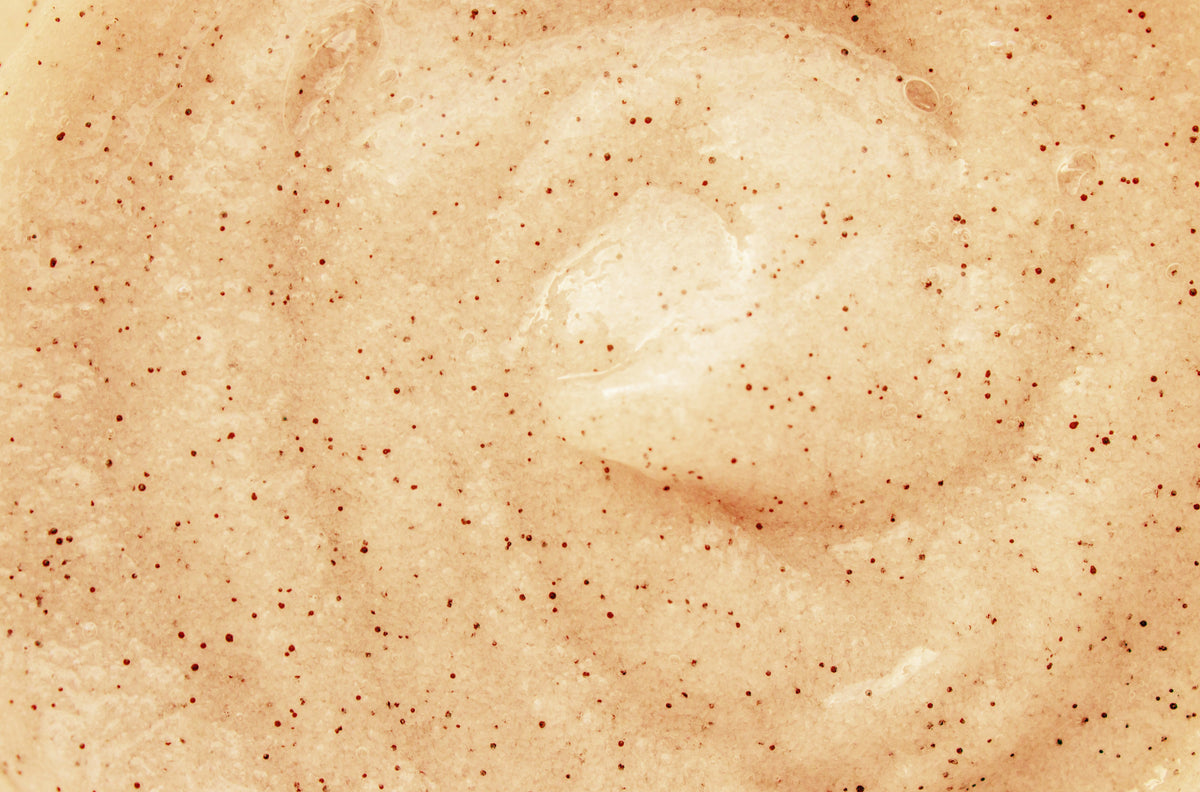
Mechanical scrubs utilize micro-beads or calibrated natural granules. Massaged softly in circular motions and rinsed with water, their rich emollient base envelops impurities and loosened corneocytes, leaving the complexion smooth, supple, and radiant. Best suited for balanced to combination skins. Coarse irregular grains should never be used on thin, sensitive skins; only silky, spherical micro-pearls are tolerated comfortably.
Enzymatic and Chemical Exfoliation
Enzymatic formulas are applied as an ultra-thin mask and left to develop for several minutes. Biological enzymes and fruit acids gently break down the protein structures holding dead cells together, deeply cleansing pores and clearing trapped sebum without rubbing. This modality represents the gold standard for thin, reactive, or rosacea-prone skin.
Recommended Exfoliation Frequency
For dry skin, exfoliate gently once a week to prevent weakening a vulnerable lipid barrier. For sensitive skin, once every ten to twelve days is ideal, following a patch test on a small area. For oily skin, exfoliate once to twice weekly, avoiding active cystic lesions. Morning represents the prime moment for facial exfoliation: cellular mitosis accelerates during nocturnal rest, resulting in a higher concentration of shed keratinocytes upon waking.
Mastering Application Technique
Smooth the formula over damp skin using gentle upward circular motions, focusing gently on textured areas (nose, chin, forehead). Avoid rigorous rubbing. Rinse thoroughly with lukewarm mineral water and finish with a refreshing splash of cool water to tone micro-circulation.
Pitfalls to Avoid
Never apply exfoliants to fragile zones: raised moles, ocular contour, broken skin, or sunburned tissue. Moderate exfoliation during peak summer months when the stratum corneum naturally thickens to shield against solar radiation. Rest assured, proper gentle exfoliation does not erase a tan; rather, by removing dull devitalized cells, it imparts unprecedented vibrancy and luminosity.
Expert Skincare Rules
- Always exfoliate BEFORE applying your treatment mask to dramatically increase active penetration.
- Exfoliation is your most potent defense against stubborn ingrown hairs.
- Always apply facial scrubs to cleanly cleansed skin.
- Generously replenish hydration immediately post-exfoliation; once cleared of dead cells, fresh epidermis requires lipid reinforcement to restore its protective acid mantle.
- Exfoliating delicate lips is just as vital as exfoliating the face to maintain softness and prolong lipstick wear.